
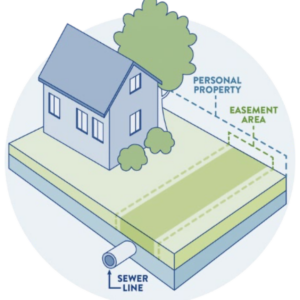
Following an inheritance, three siblings share a family cottage by dividing the land into three separate lots. Each obtained a right of way over the others' land to access their own lot. Carole became the owner of two of the three lots. Jacques, her brother, owns the third with his partner. However, the cohabitation deteriorated: Carole accused Jacques of parking illegally on her land, encroaching beyond the servitude provided, and above all, adopting harassing behaviour: threats, physical assaults, and repeated intimidation. Jacques denied the facts and asserted that parking was necessary to exercise his right of way. The matter was debated before the Superior Court.
The Court ruled in Carole's favour on all counts. The law is clear—no special treatment, even among family members!
On the Right of Way and Parking
The notarial deed granted a right to circulate, on foot or by car, but not to park. And to have that right, Jacques would have had to prove that parking was absolutely necessary, not merely useful or convenient, which he failed to do. There is no enclave. Jacques can access his land without encroaching on
Carole's. Convenience is not a right. The Court granted Jacques a six-month period to adjust his installations and cease encroaching on Carole's land.
On the Harassing Behaviour
The Court concluded that Jacques had indeed harassed and intimidated members of Carole's family. Two physical altercations, verbal threats, and an unhealthy climate far exceeded normal inconveniences between neighbours.
The Court ordered Jacques to pay $5,000 in moral damages to each member of Carole's family for the stress suffered and the loss of peaceful enjoyment of their property. Carole's partner received an additional sum of $2,500 due to a physical assault. In addition, punitive damages ranging from $1,000 to $1,500 per person were awarded, aimed at sanctioning the intentional violation of the victims' rights. Finally, a permanent injunction now prohibits him from any harassing behaviour and requires him to strictly respect the limits of his right of way.
Key Takeaways
The contract prevails: Each party's rights are strictly defined in the servitude deed.
A right of way does not grant a right to park unless it is absolutely essential, not merely convenient.
Harassment and intimidation can lead to significant damages and permanent court orders.
No one is required to tolerate abnormal neighbourhood inconveniences, and servitudes are not a free pass. Rights of way do not allow parking or storage of goods. The law ensures that everyone can live peacefully at home, with respect for their rights.
Sources :
Civil Code of Quebec : art. 1177 à 1194
Charter of Human Rights and Freedoms: art. 6 and 49.
Ref : Levert c. Levert, 2025 QCCS 1598 (CanLII).
To read the full judgment : https://canlii.ca/t/kc5w4